How We Approach Repair
Condition & Leak Source Diagnostics
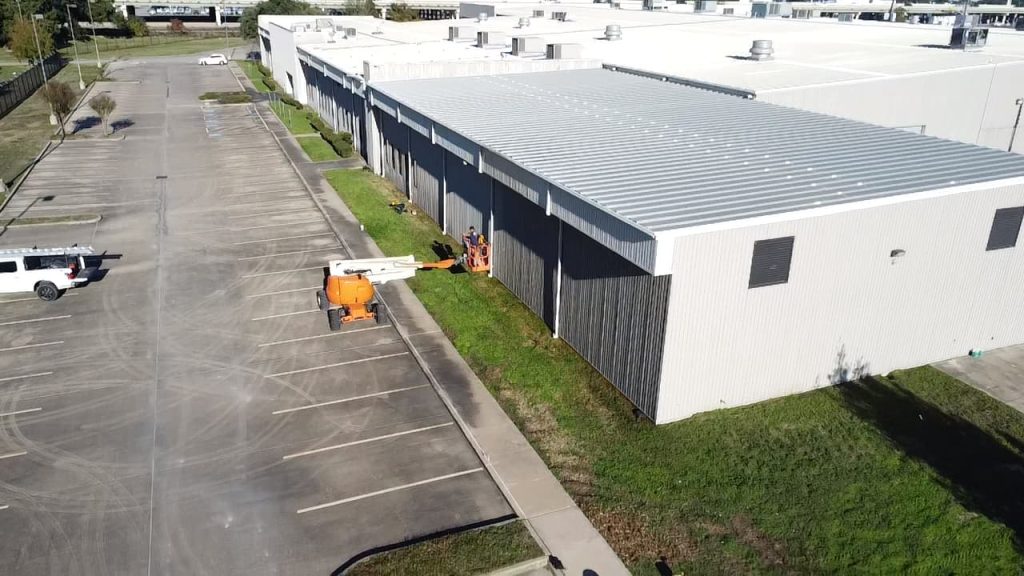
We start with targeted investigation—visual survey, core sampling (when needed), moisture scans, drainage review, and detail inspection (perimeters, penetrations, transitions). You receive a prioritized report separating immediate life‑safety and water intrusion risks from medium‑term preventive items.
Actionable Scope & Budgeting
Each recommended repair is mapped to photos, line‑item costs, and expected service life extension. We distinguish true structural or substrate failure from membrane deterioration, detailing issues, mechanical damage, or deferred maintenance.
Phased Execution Without Disruption
Scheduling leverages off‑peak hours, sectional access, and temporary protection to keep facilities fully functional. Occupant notification plans and daily progress updates prevent surprises for critical environments (healthcare, data, manufacturing).
Targeted Repair Services
We prioritize repairs that generate measurable life extension, reduce emergency calls, and defer full replacement intelligently.
Emergency Leak Interception
Rapid response teams contain active intrusions with temporary membranes, sealant stops, and water diversion—documenting conditions for insurance and capital planning.
Flashing & Penetration Rebuilds
Reconstruction of failing curbs, pipe boots, pitch pans, and termination bars improves movement accommodation, sealant longevity, and long‑term water exclusion.
Membrane & Panel Sectional Renewal
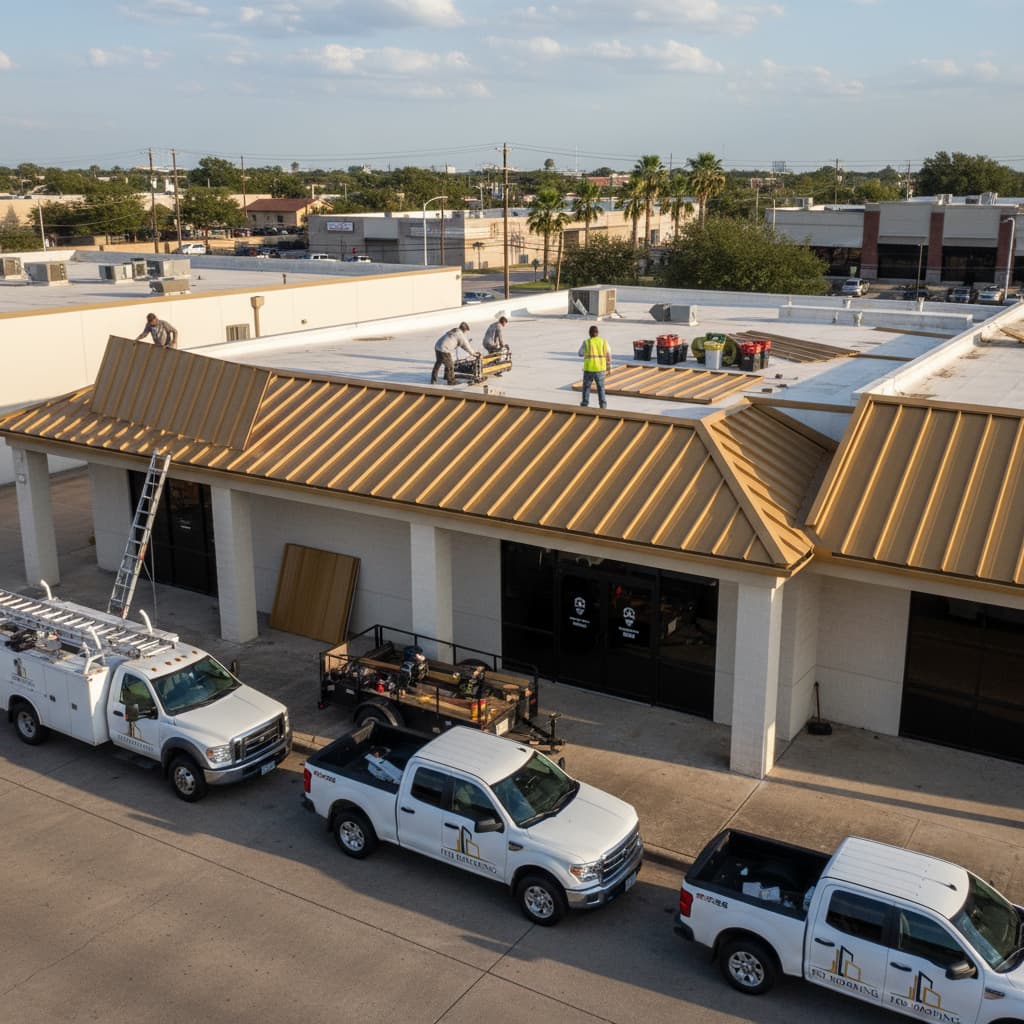
Selective removal and replacement of compromised sheets or panels with manufacturer‑approved tie‑ins preserves remaining system integrity and warranty eligibility where applicable.
Drainage & Ponding Corrections
Crickets, tapered insulation inserts, new drains or scuppers, and edge adjustments mitigate standing water that accelerates Houston UV and heat‑driven membrane degradation.
Technical Capabilities Strengthening Outcomes
Our diagnostic and fabrication resources sharpen scopes, control quality, and improve long-term performance in Gulf Coast conditions.
Moisture & Infrared Surveys
Non‑destructive scanning pinpoints trapped insulation saturation, allowing targeted removal instead of unnecessary large‑area demolition.
Uplift & Attachment Verification
Fastener patterns, perimeter enhancements, clips, and plates are assessed and reinforced to improve resistance against Houston wind‑driven storms.
In‑House Sheet Metal Fabrication
Custom flashings, saddles, gutters, copings, and protective transitions are produced to spec—reducing lead times and ensuring precise fit at complex details.
Material Compatibility Expertise
Sealants, primers, adhesives, and fasteners are selected for chemical compatibility with TPO, PVC, EPDM, asphaltic, coated metal, or composite surfaces—preventing premature failure.
Data & Documentation
Condition maps, photo logs, repair tickets, and completion summaries support insurance claims, facility audits, and multi‑site capital planning.
Preventive Maintenance Programs
Scheduled inspections, fastener torque checks, sealant renewal, drain cleaning, and minor patching reduce emergency leak frequency and stabilize annual spend.
Why Houston Facilities Choose TSI Roofing
We combine disciplined diagnostics, responsive execution, and long‑term asset planning to protect buildings and budgets in a demanding coastal environment.
Root‑Cause Focus
Repairs eliminate underlying failure mechanisms—movement stress, drainage defects, fastener back‑out—reducing repeat calls and cumulative hidden damage.
Transparent Communication
Single point of contact, prioritized reports, daily annotated progress photos, and clear distinction between urgent, preventive, and upgrade items keep stakeholders aligned.
Long‑Term Asset Strategy
Repair data feeds lifecycle forecasts, helping owners decide when continued targeted repairs no longer produce proportional ROI versus a planned replacement.